
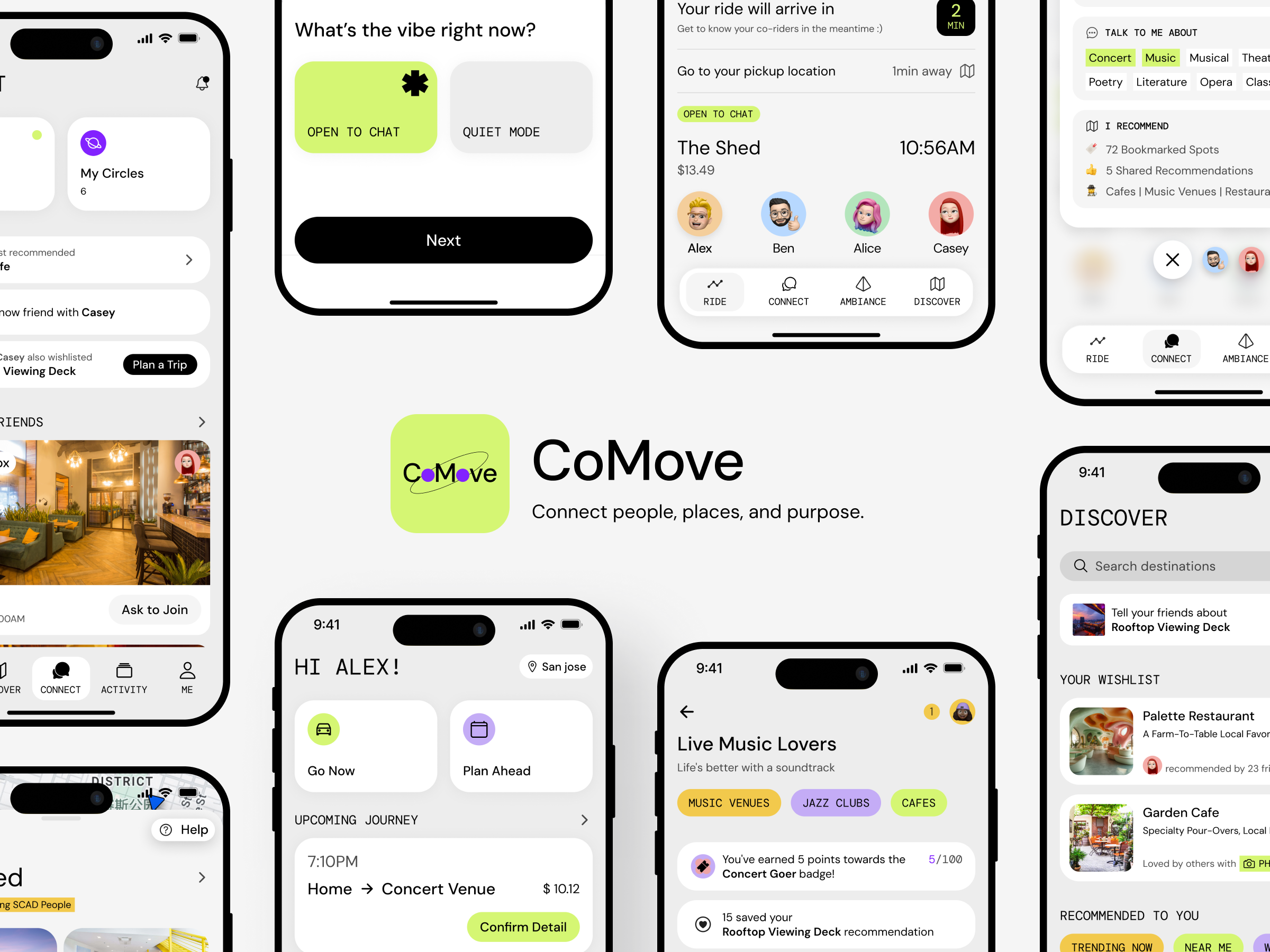

CoMove reimagines ridesharing as more than a means of transportation, it becomes a social ecosystem designed around connection, discovery, and belonging. Created by Yifei Chen, the speculative mobility concept matches riders based on shared interests, conversational compatibility, and travel context, transforming everyday commutes into meaningful experiences. Winner of Best of Best 2025 in Apps / Transport & Public Sector, the project presents a human-centered vision for the future of mobility.
Below, Yifei Chen discusses the project’s origins, the challenges of designing for human connection, and the creative journey that led to this award-winning concept.
Award: C2A Best of Best 2025 in Apps / Transport & Public Sector
Project: CoMove
Designer: Yifei Chen
Yifei Chen: My name is Yifei Chen, and I’m a designer working at the intersection of product, brand, and visual systems. I specialize in shaping experiences that are not only functional but also emotionally resonant and visually cohesive, particularly within complex domains like fintech and emerging technologies.
My practice spans web and mobile products, design systems, campaigns, and illustration, with a focus on building scalable visual languages and interaction principles that support clarity, accessibility, and storytelling. Beyond my professional work, I explore creative expression through writing, drawing, and designing narrative-driven games. I view creativity as a connective force, a way to navigate complexity, make meaning, and invite others into shared understanding.
Yifei Chen: CoMove is a speculative mobility concept that transforms shared transit into a socially driven, branded experience. Instead of treating commuting as a purely logistical act, it reframes it as a dynamic social space, designed especially with Gen Z in mind.
The goal was to explore how experience design, visual systems, and contextual technology could turn overlooked everyday moments into opportunities for connection, exploration, and belonging. By focusing on people and places rather than just transportation, CoMove helps users meet like-minded individuals, discover local recommendations, build communities, and transform routine commutes into meaningful experiences.
Yifei Chen: The idea started with a simple question: what if everyday transit could be more than just getting from A to B? As part of my MFA thesis, I wanted to reimagine shared mobility as a social space full of untapped potential for connection and community.
As a member of Gen Z myself, I was interested in how my generation values sustainability and meaningful experiences while often facing limited and uncomfortable transportation options. CoMove became a speculative but deeply human system that matches riders based on conversational compatibility, shared interests, and contextual cues. Every design decision was grounded in transforming an ordinary commute into something that sparks curiosity, trust, and belonging.
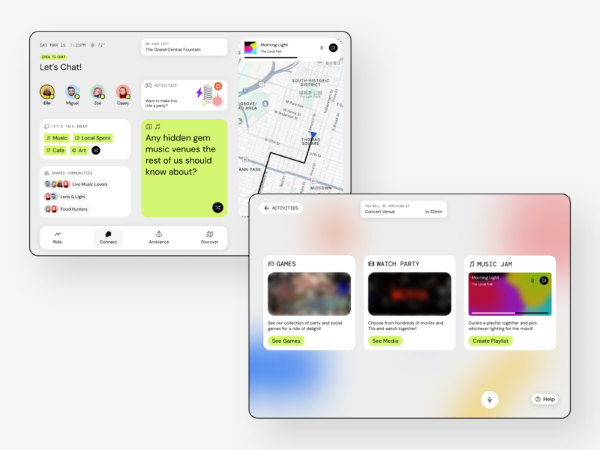
Yifei Chen: The biggest challenge was ensuring that technology supported human connection rather than replacing or forcing it. I wanted to create the conditions for trust and conversation to emerge naturally.
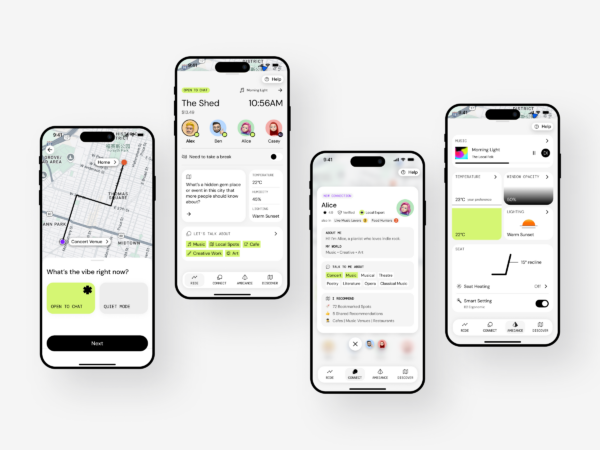
The solution was to design gently, using ambient prompts, contextual signals, and opt-in social features that respect user autonomy. This balance between facilitation and freedom ultimately shaped the soul of the brand narrative, which I call “the Connected Host”, warm, welcoming, and emotionally intelligent, but never intrusive.
Yifei Chen: One of the most distinctive aspects of CoMove is its ability to balance emotional nuance with scalable systems. It’s about more than moving people efficiently, it’s about creating the conditions for meaningful connections through shared interests and contextual cues.
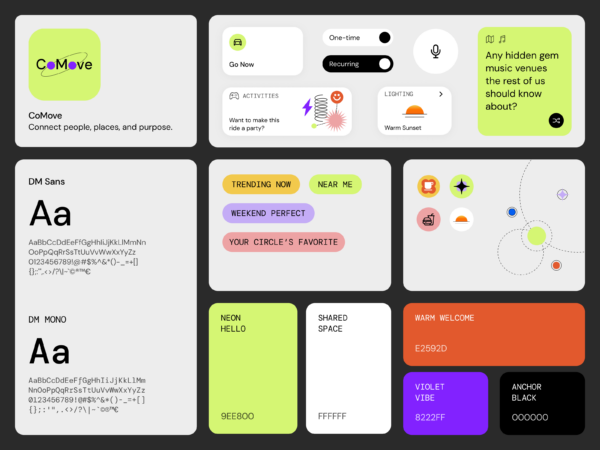
Visually, this translated into a soft, modular identity system inspired by transit wayfinding but reimagined through a human lens. Rounded forms, inviting gradients, and illustrations all work together to create an atmosphere that feels like an open invitation rather than an instruction.
Yifei Chen: People-centered systems thinking has been central to projects like CoMove. I’m inspired by design that respects human behavior without forcing it.
I also see visual identity as a way of guiding emotion and interaction rather than simply decorating interfaces. More broadly, I believe the creative industry is moving toward systems that blend product, narrative, and empathy. AI, modularity, and human-centric interfaces are accelerating this shift, but the real value emerges when technology supports rather than replaces human experiences.
Yifei Chen: I grow by staying curious to people, perspectives, and changes in the world. Conversations with people outside my field often inspire me the most. I also keep up with developments in technology, culture, and design because creative work exists within broader systems. Personal projects such as writing poetry and drawing help me stay connected to feeling and narrative, which is often where my best ideas originate.
Yifei Chen: Winning a Creative Communication Award means a great deal to me because it shows that the work resonated beyond its function. For me, design is not only about clarity or aesthetics; it’s about storytelling and emotional architecture.
This recognition motivates me to continue exploring the space between systems and stories and to create work that is both intentional and deeply human.
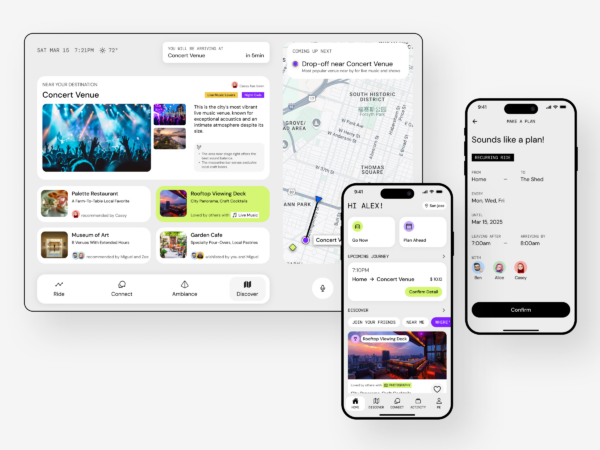
CoMove presents a compelling vision for the future of mobility, one where transportation becomes an opportunity for connection rather than simply a means of getting from one place to another. Through thoughtful UX design and a deeply human approach to technology, Yifei Chen has created a concept that reimagines commuting as a shared experience built on community, discovery, and belonging.