
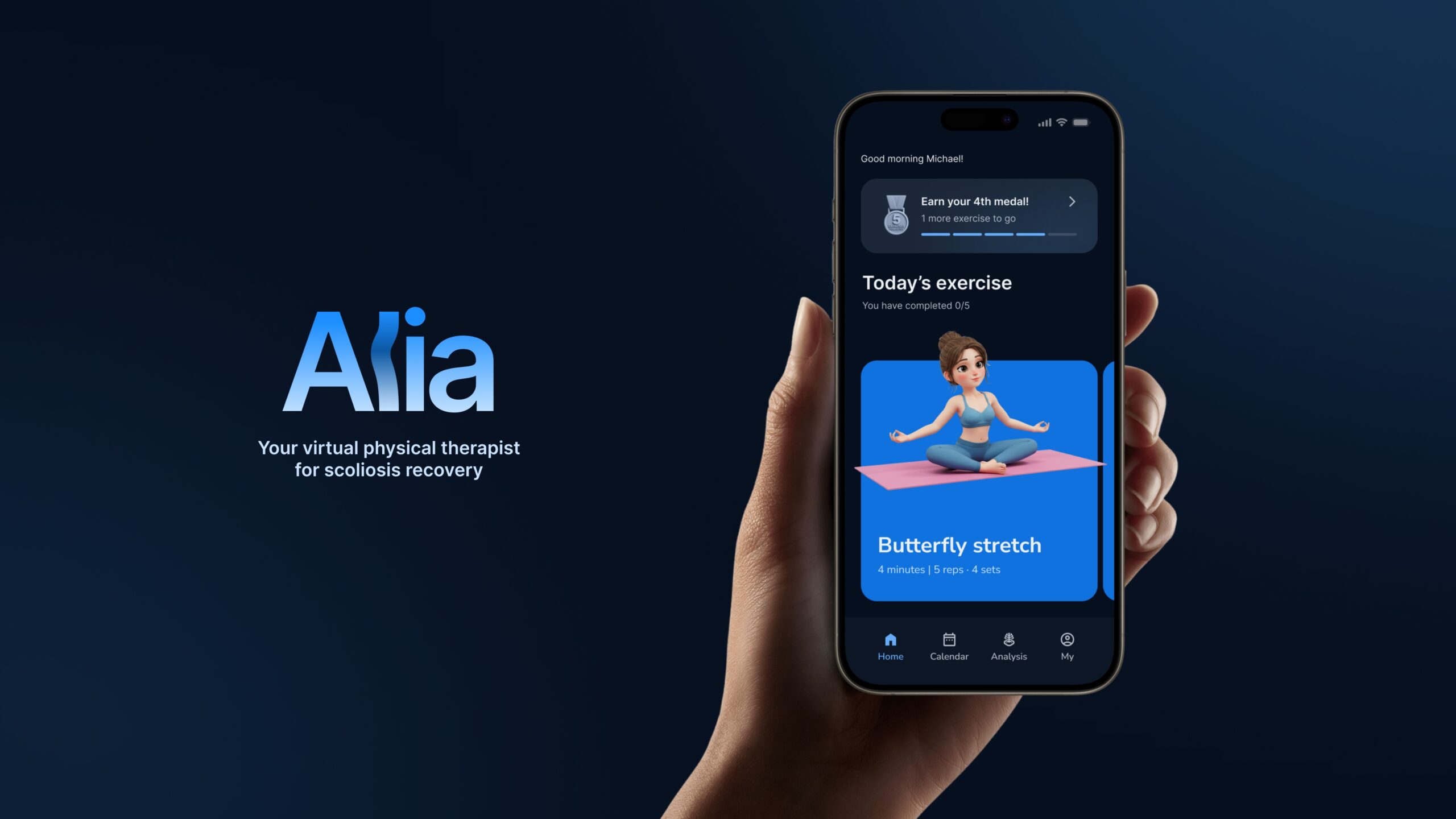

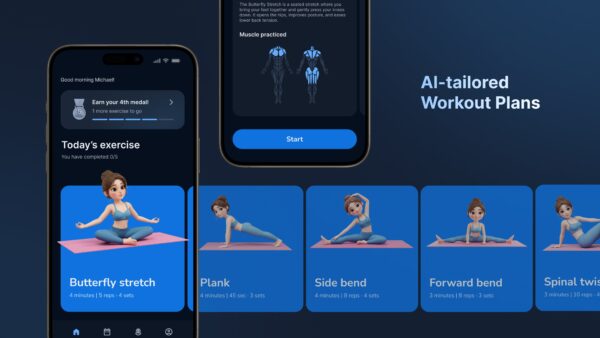
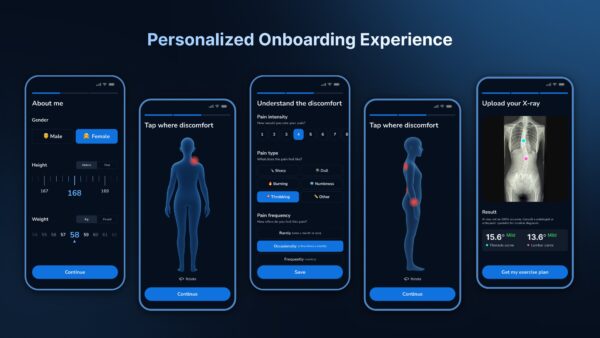
Alia: Your Virtual Physical Therapist for Scoliosis Recovery is an innovative health app that brings expert scoliosis care directly into patients’ homes. Combining AI-powered personalization with AR-guided exercise sessions and real-time motion tracking, the platform helps users recover more safely and confidently, regardless of cost or location. Winner of Best of Best 2025 in Health / Apps, Alia demonstrates how technology can make physical therapy more accessible, personal, and effective.
We gained insight from Yangtian Yan and Haotian Wu as they discuss the inspiration behind Alia, the challenges of designing digital healthcare experiences, and the creative journey that led to this award-winning project.
Award: C2A Best of Best 2025 in Health / Apps
Project: Alia: Your Virtual Physical Therapist for Scoliosis Recovery
Designers: Yangtian Yan & Haotian Wu
Client: Corporation des concessionnaires automobiles du Québec
Haotian Wu: I’m a UX designer at Google focusing on AI-driven creative tools, especially video and visual creation. My work usually sits between design, technology, and storytelling, helping people turn ideas into actual content faster. I care a lot about making complex technology feel intuitive.
Yangtian Yan: I’m a visual designer on the Google Maps team, where I design the future of 2D and 3D map systems and world-building in 3D rendering engines. As a design prototyper, I thrive in the sweet spot between high-level design and technical engineering.
Yangtian Yan: Alia is about using AI and AR to support physical therapy outside the clinic. The goal was to help patients perform exercises correctly, stay consistent, and recover more confidently at home. Accessibility and ease of use were the biggest priorities.
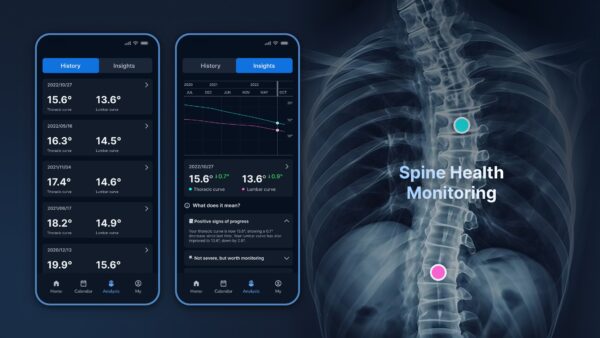
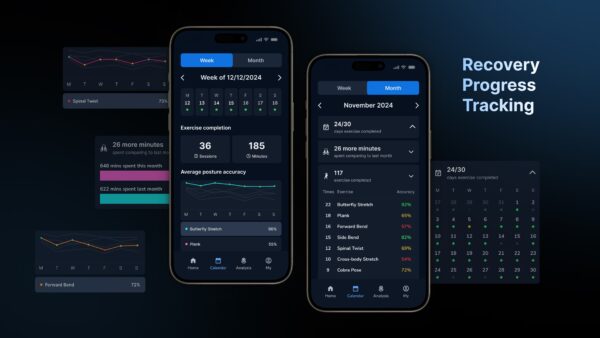
Yangtian Yan: The idea started from a friend who has scoliosis and struggled to stay consistent with physical therapy exercises. I saw how difficult recovery could be without constant guidance. That inspired Alia as an AI coach that provides feedback, reminders, and support at home.
Yangtian Yan: One challenge was translating medical exercise guidance into something simple and clear. Since this was initially a prototype, we focused on refining both the concept and the interaction design. Continuous iteration helped us clarify the experience and make it more intuitive.
Haotian Wu: I think the strongest part is how approachable the experience feels despite being healthcare-related. It supports recovery without feeling clinical or stressful, which encourages users to stay consistent.
Yangtian Yan: For me, the immersive AR-guided workout session is the clear differentiator. It aligns with our vision of democratizing access to personal training by giving users at home the same level of care and precision they would receive alongside a professional therapist.
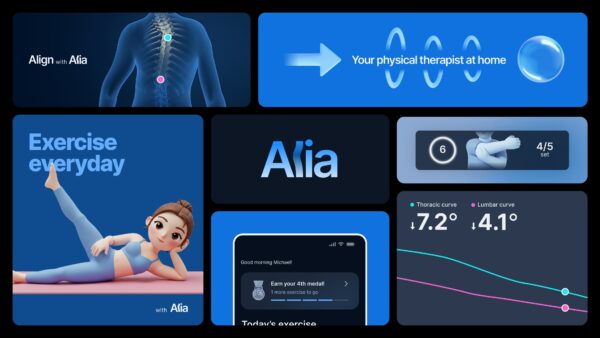
Yangtian Yan: Our creative signature is making “high-tech” feel “high-touch.” We balance the need for cutting-edge AI and AR integration with our belief that technology should never feel clinical or intimidating.
Haotian Wu: Right now, I’m very interested in AR-powered real-time feedback for exercise and recovery. It has enormous potential to make physical therapy more accessible and engaging.
Yangtian Yan: I am inspired by how AI tools are enabling designers to become full-stack product builders. The definition of design is shifting from simply pushing pixels to shaping entire product experiences holistically.
Haotian Wu: I stay curious, experiment with new AI tools, and continue learning from other designers. Teaching and mentoring also help me refine my thinking.
Yangtian Yan: I never stop learning. I consume information across many design disciplines and synthesize it into my own philosophy. Whether it’s a large-scale app or a small interaction prototype, I am always building and experimenting.
Yangtian Yan and Haotian Wu: This recognition means a great deal because it validates work that connects design, AI, and healthcare. It motivates us to continue exploring projects that genuinely improve people’s lives and encourages us to go even deeper into this space.
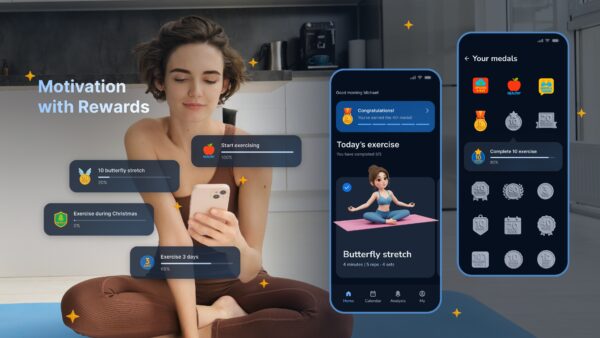
Alia: Your Virtual Physical Therapist for Scoliosis Recovery showcases how emerging technologies can bridge critical gaps in healthcare access. By combining AI, augmented reality, and human-centered design, Yangtian Yan & Haotian Wu have created a solution that empowers people to take control of their recovery from home. The project is a powerful example of how thoughtful digital experiences can make healthcare more accessible, supportive, and effective.